Iran’s foreign minister leaves Pakistan as Trump cancels visit by US envoys
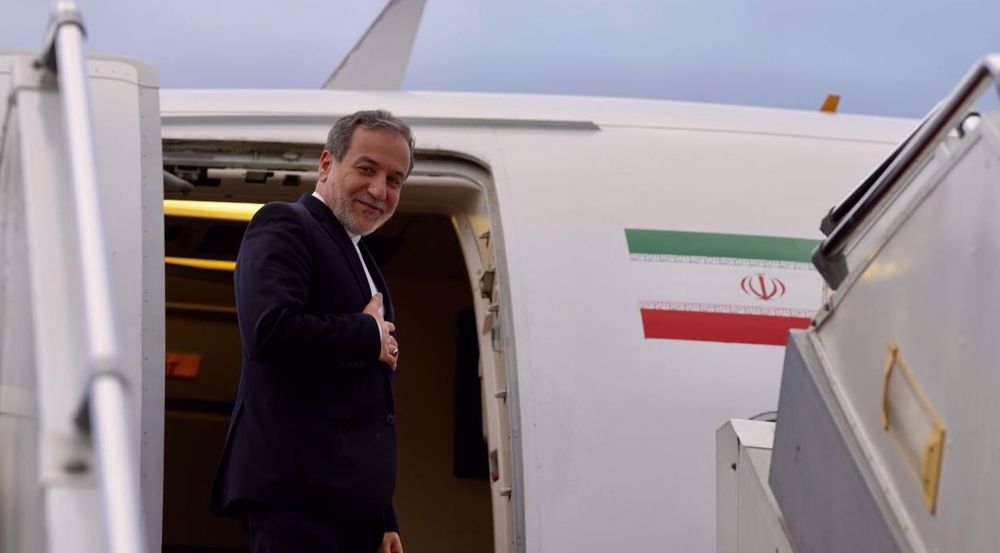
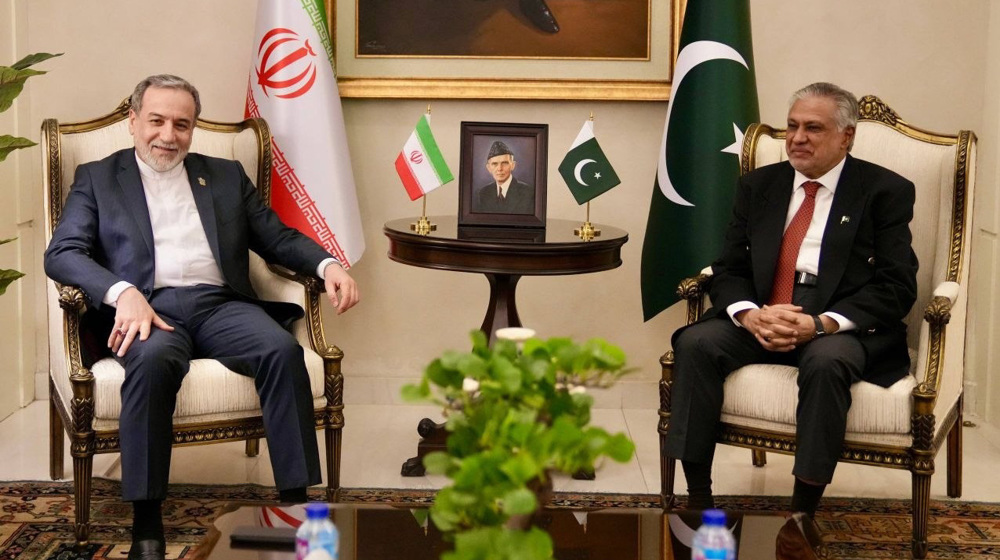
Iran’s Foreign Minister Abbas Araghchi left Islamabad on Saturday after holding discussions with senior Pakistani officials on regional security and a ceasefire with the United States, during which he presented Iran’s demands on ending the eight-week war.
While in Islamabad, the first leg of his three-nation tour, Araghchi met with Pakistan’s Army chief Field Marshal Asim Munir, a key figure in the mediation effort, as well as Prime Minister Shehbaz Sharif and Foreign Minister Ishaq Dar.
The top diplomat thanked Pakistan for its efforts to mediate the April 8 ceasefire between Tehran and Washington and the subsequent talks, and laid out Iran’s “principled positions” on the state of the truce and the complete end to the imposed war against Iran.
Pakistan’s top diplomat, Senator Dar, said that the meeting with Araghchi and the Iranian delegation lasted around two hours, during which Pakistan stressed “the importance of dialogue and diplomacy.”
Iran's Foreign Minister Seyyed Abbas Araghchi meets with Pakistani Prime Minister Shehbaz Sharif in Islamabad.
— Press TV 🔻 (@PressTV) April 25, 2026
Follow Press TV on Telegram: https://t.co/LWoNSpkJSh pic.twitter.com/NabRzpyHu1
Prime Minister Sharif hailed the meeting with Araghchi as the “most warm, cordial exchange of views on the current regional situation.”
“We also discussed matters of mutual interest, including the further strengthening of Pakistan–Iran bilateral relations,” he posted on X.
The Iranian delegation left Islamabad before US envoys, Steve Witkoff and Jared Kushner, were expected to travel to the Pakistani capital to meet with mediators.
US President Donald Trump, however, later told Fox News that he had canceled the visit.
Tehran had previously said that there was no plan for the Iranian delegation to meet with the American representatives in Islamabad.
Pakistan’s mediation efforts have stalled over the illegal US naval blockade of Iranian ports and excessive demands put forward by Washington.
Araghchi will now travel to Oman and then Russia to discuss efforts to end the illegal war, which was launched against Iran by Israel and the United States on February 28.
In addition to 100 waves of retaliatory strikes against US and Israeli assets across the region, Iran also put restrictions on transit in the Strait of Hormuz, through which about 20 percent of the world’s oil and liquefied gas supplies in peacetime.
US President Donald Trump unilaterally extended the two-week ceasefire this week and hours before it was set to expire. He said there was no rush to reach a deal with Iran, but that he was awaiting a proposal from Tehran.
Pezeshkian vows to firmly defend Iran’s positions, convey its strength at UN
US, Israel must accept 'a region free of their evil, criminal presence': IRGC
Iran FM: Our first task in New York is to defend the just cause of Iranian people



VIDEO | Press TV's news headlines
VIDEO | Priests rally in Rome to honor Palestinian, Lebanese children murdered by Israel
Iran’s military warns of ‘unpredictable blows’ in response to US threats
VIDEO | US economic war on Iran
Iran FM meets with US envoy on UN meeting’s sidelines at American side’s insistence: Report
UN chief warns Israeli violence in West Bank raises ‘specter of ethnic cleansing’
VIDEO | ‘Korea gets nothing, loses everything, with Hormuz deployment’
Iran parliamentary commission approves penalties for violators of Hormuz laws



 PressTV NEWSLETTER
now
PressTV NEWSLETTER
now
 This makes it easy to access the Press TV website
